Technology Revolutionizes Trading: AI and Automation Reshape Financial Markets
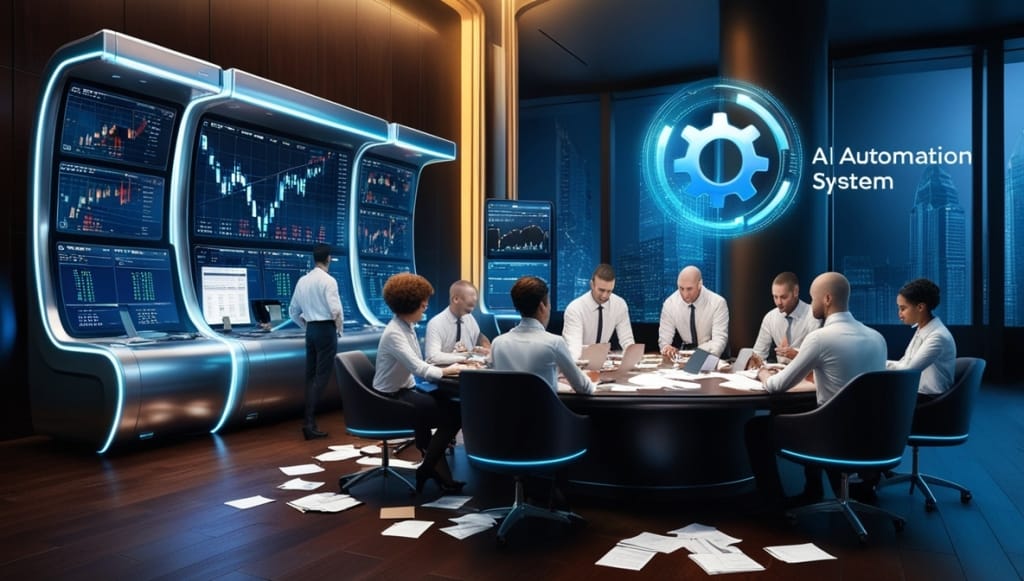
Frantic hand signals in stock exchange pits are a thing of the past. JPMorgan Chase & Co. reports that algorithms now handle more than 85% of equity trading in the United States. Important concerns concerning profit potential, systemic hazards, and the changing role of traders are brought up by this dramatic change from human-driven to machine-dominated markets.
From Neural Networks to Gut Instinct: AI’s Market Domination
The 2022 Goldman Sachs report revealed a startling fact: AI-powered hedge funds outperformed human-managed counterparts by 12% annually since 2018. These systems don’t just crunch numbers—they analyze satellite images of oil storage tanks, parse CEO speech patterns in earnings calls, and track geopolitical events in real-time.
Take BlackRock’s Alladin platform. This AI-driven system manages $21.6 trillion in assets, making split-second decisions based on:
- Global supply chain disruptions detected through shipping data
- Consumer sentiment shifts mined from social media trends
- Predictive inflation models using grocery store pricing APIs
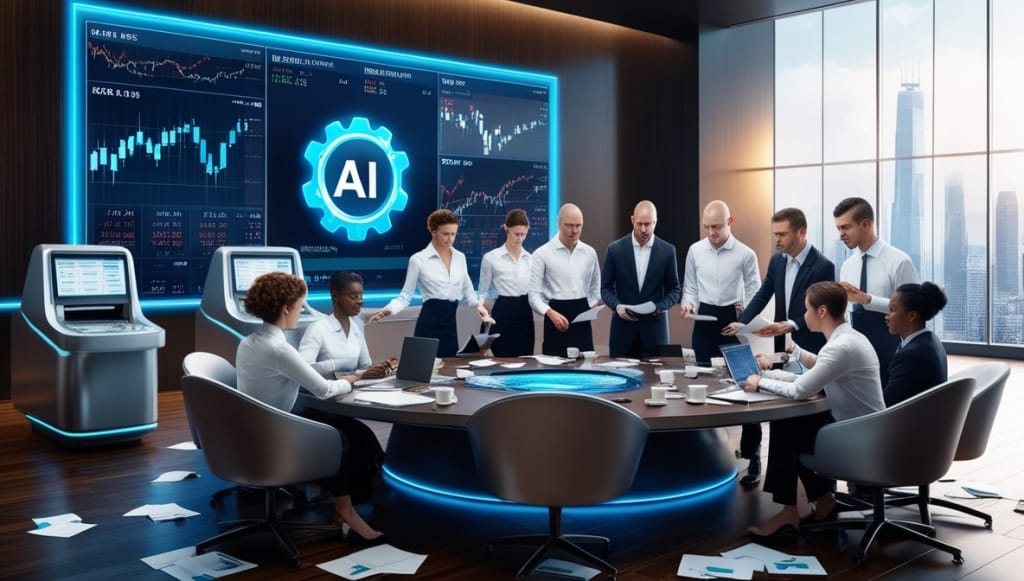
The real game-changer? Self-improving algorithms. During the 2023 banking crisis, systems like Morgan Stanley’s AlphaBot adjusted risk parameters 47 times faster than human teams, potentially preventing $900 million in losses.
Key Development: The rise of “AI whisperers”—traders who specialize in interpreting machine learning outputs for strategic decisions. As noted in our DeepSeek Technology deep dive, this human-machine collaboration defines modern finance.
Automation’s Double-Edged Sword: Speed vs. Stability
While automation enables 24/7 trading across Tokyo to New York, it introduces unprecedented vulnerabilities:
| Benefit | Risk | Mitigation Trend |
|---|---|---|
| 0.0003s trade execution | Flash crashes (2010, 2015, 2022) | SEC’s “Circuit Breaker” rules |
| Emotion-free decisions | Over-optimization (“curve fitting”) | Hybrid human-AI validation |
| Global market access | Cross-border regulatory clashes | Blockchain-based audit trails |
The 2024 EU Market Abuse Regulation update now requires AI trading systems to explain decision logic—a challenge for deep learning models. As discussed in Drone Technology Regulations, policymakers struggle to keep pace with autonomous systems.
The Retail Revolution: Democratization or Delusion?
Platforms like eToro and Robinhood leverage AI to offer:
- Predictive pattern alerts for crypto markets
- Automated IRA rebalancing
- Social trading mirroring top performers’ strategies
Yet FINRA’s 2023 report shows 68% of retail algo traders lose money within 6 months. The culprit? Overreliance on backtested strategies without understanding market microstructure.
Expert Insight: “It’s like giving a Ferrari to someone who just learned to drive,” warns Dr. Elena Torres, MIT Financial Engineering lead. “These tools need guardrails.”
Quantum Leap: The Next Frontier
Goldman Sachs predicts quantum computing could slash derivatives pricing time from hours to seconds by 2026. Early adopters like Barclays are experimenting with:
- Portfolio Optimization: Solving 10,000-asset combinations in 3 minutes
- Fraud Detection: Real-time analysis of 500M+ daily transactions
- Climate Risk Modeling: Simulating 50-year market impacts of ESG policies
Our analysis of Google Quantum AI breakthroughs reveals how financial qubits differ from traditional computing.
Navigating the Machine Age: Trader Survival Strategies
- Upskill in AI Interpretation: Learn to audit algorithm decisions
- Specialize in Niche Markets: Areas where human intuition still matters
- Adopt Hybrid Models: Pair AI speed with human judgment
As noted in Humanoid Robots in Finance, even client-facing roles now require tech literacy.