Goalpariya Lokageet: History, Styles & Famous Singers
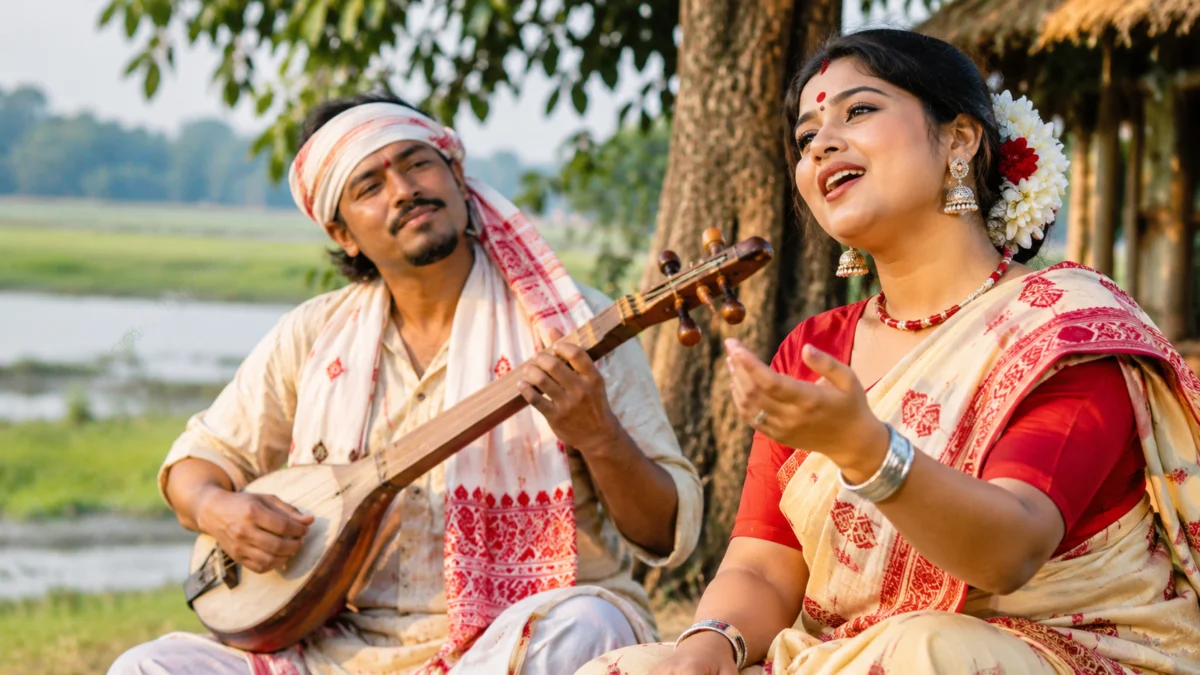
Goalpariya Lokageet is one of the distinctive folk-music traditions of western Assam. Rooted in the language, memories and everyday lives of the Goalpara region, these songs carry stories of love, separation, work, travel, nature and community life. They are especially valuable because they preserve voices and musical expressions that can be missed when Assam’s music is described only through its better-known festival songs.
This guide explains what Goalpariya Lokageet is, where it comes from, the themes and styles listeners may encounter, the role of instruments such as the dotara, and the contribution of celebrated performers including Pratima Barua Pandey.
What Is Goalpariya Lokageet?
Goalpariya Lokageet, also written as Goalpariya Lokogeet or Goalporia Lokgeet, refers to folk songs associated with the Goalpara region of western Assam. The tradition is closely connected with local speech, oral storytelling and the experiences of communities in the region. Its language is not always identical to standard written Assamese; local varieties and linguistic influences are part of what gives the songs their character.
The songs are not simply old melodies preserved for entertainment. They carry memories of people, occupations, relationships and places. Their words may describe a person waiting for a loved one, a worker travelling for employment, life beside rivers, or the feelings that arise from separation and hardship. The exact wording and pronunciation can vary between performers and local traditions.
Where Did Goalpariya Folk Music Develop?
The music is associated with the western part of Assam, particularly the wider Goalpara cultural region. Gauripur and other local centres are important to the public history of the tradition. The songs developed through everyday community practice and oral transmission rather than through a single composer or institution.
Many songs reflect the work and social surroundings of the region. Accounts of the tradition describe songs connected with mahouts and elephants, buffalo herders, boatmen and people whose livelihoods involved travel or labour. These settings help explain why rivers, journeys, waiting, love and rural life appear so often in Goalpariya song themes.
Goalpariya music also belongs to a wider cultural landscape that crosses present-day administrative and state boundaries. Researchers have discussed its relationship with Rajbanshi communities and the complex histories of language, identity and performance in the region. It is therefore better understood as a living regional tradition than as a narrowly defined collection of songs.
Common Styles and Themes in Goalpariya Songs
Goalpariya Lokageet is not always divided into one universally agreed list of subgenres. Names and classifications can differ between communities, singers and researchers. The following descriptions are useful ways to begin listening without treating them as rigid categories.
Bhawaiya: Bhawaiya is often associated with emotional folk singing and themes such as longing, love, distance and the lives of people who travel or work away from home. Some songs are closely connected with the experiences of mahouts, cart drivers and other working communities. It is a prominent strand in discussions of the folk music of western Assam and the wider North Bengal region.
Chatka: Chatka songs are another form associated with the Goalpariya folk tradition. Some performances may include dance, while others are presented primarily as songs. Their rhythm and performance style can differ from slower, more reflective pieces.
Mahout and elephant songs: Songs about mahouts and elephants are an especially recognisable part of the repertoire popularised for wider audiences. They describe a world of work, travel, affection and separation. The famous song often known as “Hastir Kanya” is closely associated with this theme.
Boatmen, herders and everyday life: Other songs draw on the lives of boatmen, buffalo herders and rural communities. Rather than describing history in formal terms, they preserve it through ordinary scenes, relationships and feelings.
Instruments and the Sound of Goalpariya Lokageet
The dotara is strongly associated with Goalpariya folk performance. This plucked string instrument provides a melodic and rhythmic foundation for many songs. Depending on the performer and arrangement, singing may also be accompanied by percussion, flute or other local instruments.
Traditional performances can be relatively simple, allowing the voice, words and storytelling to remain central. Contemporary stage and recorded versions may use fuller arrangements, but the regional melodic character and style of singing remain important to the listener’s experience.
For a wider introduction to instruments used in Assam’s musical traditions, read our guide to traditional musical instruments of Assam.
Pratima Barua Pandey and the Wider Recognition of Goalpariya Songs
Pratima Barua Pandey is one of the best-known performers associated with Goalpariya Lokageet. Born into the Gauripur royal family, she developed a close interest in the folk songs heard around her and learned repertoire from people connected with the region’s everyday musical life. Her singing helped bring Goalpariya songs to audiences well beyond their original local settings.
Dr. Bhupen Hazarika played an important role in encouraging wider recognition of her talent. Her performances and recordings helped listeners discover songs that might otherwise have remained unfamiliar outside the region. She received the Padma Shri in 1991 and the Sangeet Natak Akademi Award. Her legacy is important not only because of her voice, but also because she helped draw attention to a musical tradition and the communities connected with it.
When exploring her work, look for recordings of songs such as “Hastir Kanya” and “Mur Mahut Bandhure”. Use recordings that identify the singer and source clearly, since folk songs may have multiple versions and performers.
How Goalpariya Lokageet Is Different from Bihu Songs
Bihu songs are closely associated with the Bihu festival cycle and are among the best-known forms of Assamese music. Goalpariya Lokageet, by contrast, is rooted in the folk traditions and speech of western Assam’s Goalpara region. The two traditions both express community life, emotion and local identity, but they should not be treated as interchangeable.
Their performance settings, regional language features, repertoire and musical character can differ. Exploring both helps listeners understand how varied the musical cultures of Assam are. You can also read our broader article, Discovering the World of Assamese Music, for a wider introduction.
Why Goalpariya Lokageet Still Matters
Folk songs preserve knowledge that may not appear in official documents: how people worked, what they valued, how they travelled, what they celebrated and what they missed. Goalpariya Lokageet gives a musical record of community experience and regional language. It also reminds listeners that cultural traditions are maintained by singers, families, local performers and audiences, not only by famous recording artists.
Keeping the tradition alive means listening carefully, crediting performers, recording local versions responsibly and supporting musicians who continue to perform it. Schools, cultural organisations, researchers and digital music platforms can all help make these songs accessible to younger listeners without separating them from their regional context.
How to Start Listening to Goalpariya Lokageet
Begin with well-known recordings associated with Pratima Barua Pandey, then explore performances by other singers from western Assam. Compare different versions of a song and pay attention to pronunciation, vocal expression, melody and accompaniment. Where possible, choose official releases, archival recordings or videos that clearly credit the performer.
Do not assume that one recording represents the whole tradition. Oral folk music changes as it is learned, performed and passed between generations. Different versions can be valuable records of the communities and artists who keep the repertoire alive.
Frequently Asked Questions
What does Goalpariya Lokageet mean?
It means the folk-song tradition associated with the Goalpara region of western Assam. The name is also written as Goalpariya Lokogeet or Goalporia Lokgeet.
Who is famous for singing Goalpariya Lokageet?
Pratima Barua Pandey is among its best-known performers. Her recordings helped introduce the music to wider audiences.
Which instrument is associated with Goalpariya folk songs?
The dotara is strongly associated with the tradition. Other instruments may be used depending on the song and performance.
Are Goalpariya Lokageet and Bihu songs the same?
No. Both belong to Assam’s musical heritage, but they come from different regional and performance traditions.
What are some well-known Goalpariya songs to look for?
Listeners often begin with recordings such as “Hastir Kanya” and “Mur Mahut Bandhure”. Check the performer and recording credits because folk songs can have multiple versions.
Sources and Further Reading
For additional context, see the research study on the changing performance and social context of Goalpariya folk music, the profile of Pratima Barua Pandey and Goalpariya music, and the Majuli University of Culture Performing Arts syllabus, which includes the study of music and folk forms of Assam.